
How to Search Spartanburg County Arrest Records
The first stop for Spartanburg County arrest records is the Sheriff's Bookings Search. The portal lists people booked into the county jail, and it is the official source for recent arrests. The Detention Services Division builds the inmate population list and the booked-and-released list so the public can see who is in custody, the bail amounts, and basic booking details. The search is free. You do not need an account to use it.
Booking data and a court case are tracked in different systems. The Sheriff shows the arrest and the jail status. The state index shows the criminal court case once the Solicitor moves it forward. To follow a charge from the jail to a verdict, you may use both tools. The Sheriff posts the booking, and the Spartanburg County court records page explains the case side.
Use these steps to find a recent arrest.
- Open the official Bookings Search on the Sheriff's site.
- Enter the person's name. A booking name and number help confirm a match.
- Read the booking entry for charges, bail, and booking date.
- Check the booked-and-released list if the person is no longer in custody.
- Call the Detention Center at 864-596-2607 to confirm a current status.
- Search the state Public Index by name to find the criminal court case tied to the arrest.
The Sheriff warns that booking data changes fast and may not show the latest status, so confirm anything important by phone.
Who Handles Spartanburg County Criminal Cases
After an arrest, the case moves to the prosecutor. In South Carolina the prosecutor is called the Solicitor. The Seventh Circuit Solicitor handles criminal cases for Spartanburg and Cherokee Counties. The office represents the State in General Sessions and decides which charges go forward. Solicitor Barry Barnette has led the office since 2011. The office sits inside the downtown judicial center on Magnolia Street.
The state criminal court is General Sessions, a division of Circuit Court. Felonies and serious misdemeanors are prosecuted there. The Spartanburg trial docket is built by the Clerk by adding indicted cases based on arrest date, and the Solicitor may release a top 10% docket 45 days before publication. So an arrest record and the later court file are linked but separate.
The Solicitor's office is shown below.
Here is where the prosecutor works.
Seventh Circuit Solicitor
180 Magnolia St, 5th Floor, Suite 5108
Spartanburg, SC 29306
864-596-2575
The Solicitor takes the arrest forward into a charge, then a plea or trial. The arrest record is just the first step.
You can read more about the prosecutor on the county site.
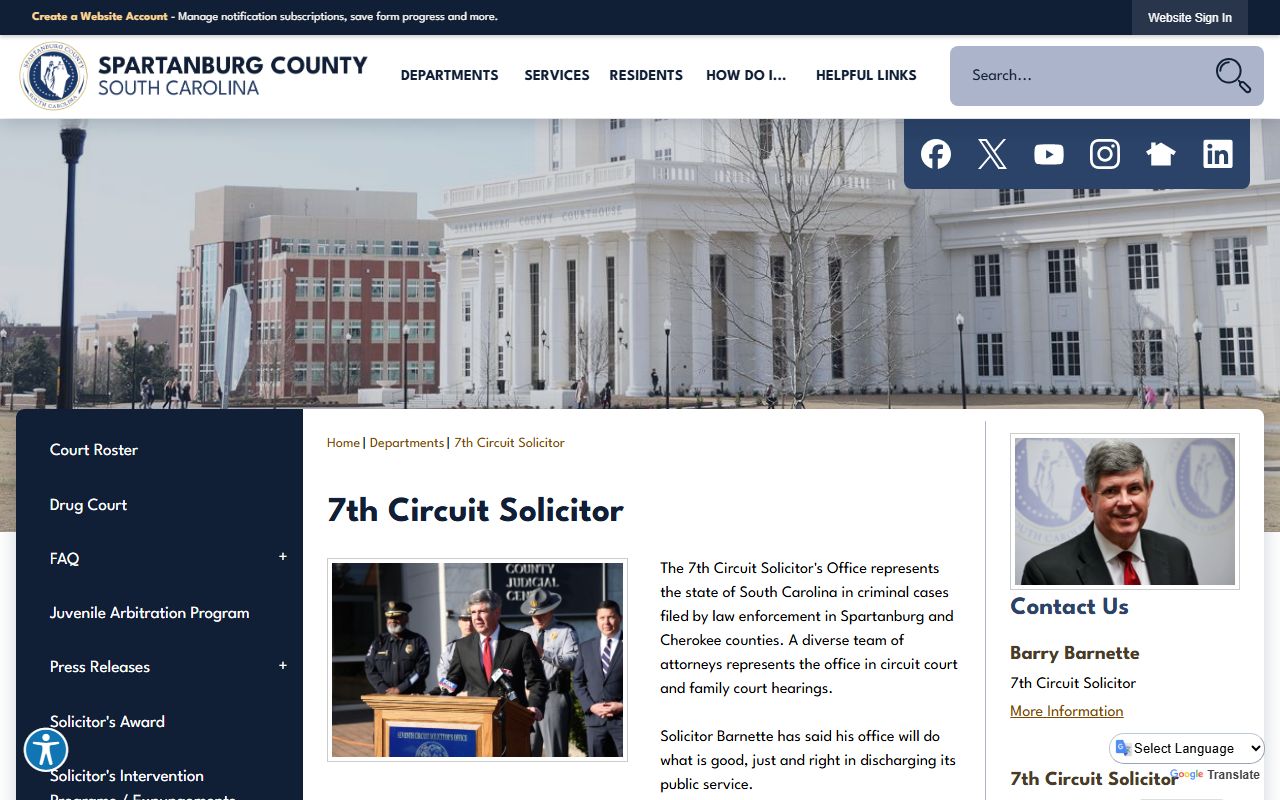
The county's Seventh Circuit Solicitor page lists the office scope, the address, and the phone. It is the place to confirm who is prosecuting a Spartanburg County arrest.
Arrest Record vs Criminal Court Record
People often treat an arrest record and a criminal court record as one file. They are not. An arrest record is made by the Sheriff at booking. A criminal court record is made by the court once the case is filed. One shows custody. The other shows the legal process and the outcome.
The table below sorts them out.
| Feature | Arrest Record | Criminal Court Record |
|---|---|---|
| Who makes it | Spartanburg County Sheriff | Clerk of Court / Solicitor |
| Where to find it | Bookings Search | State Public Index |
| What it shows | Booking, charges, bail, mugshot | Indictment, hearings, plea, disposition |
| Means guilt? | No, only that a person was held | Only the disposition shows the result |
To trace a Spartanburg County arrest to its end, you check both. The booking comes first. The full case history sits in the court records system.
Note: A booking entry shows only that someone was arrested and held; it is not proof of a conviction or a complete criminal history.
What Spartanburg County Arrest Records Show
A booking entry holds a standard set of fields. The Sheriff's portal is built mainly around the inmate's name and booking number. The table lists the search inputs, and the next one lists what a booking result returns. Both come from the Detention Services portal and its public disclaimer.
| Search Field | Type | Notes |
|---|---|---|
| Name | Text | Search current and recent bookings by name |
| Booking number | Text | Name number used for mail and money too |
| Current population | List | Shows who is in custody now |
| Booked and released | List | Shows recent release status |
Once you open a booking, the entry reads like the next table.
| Field | What It Shows |
|---|---|
| Mugshot | Booking photo from the jail intake |
| Name | Full booking name of the arrested person |
| Booking date and time | When the person was brought in |
| Charges | Charge descriptions tied to the booking |
| Bail / bond amount | Bail set, which the Sheriff says is included |
| Release status | Whether the person was booked and released |
Some fields, such as a court date or housing location, may not appear. For hearing dates, use the state index. Juvenile and protected booking records are not public.
Mugshots and Recent Bookings
The official mugshot source in Spartanburg County is the Sheriff's Bookings Search. The portal subdomain is even named for it. The county wants the public to use the official tool, not third-party mugshot sites that may charge to remove a photo. The official booking data is free and tied to a real jail record.
A mugshot is a booking photo. It is taken during intake, after a pat-down and the booking questions. The photo is not a conviction. It only shows that a person was admitted to the jail on a charge. The booking page also notes that intake includes a search for weapons and an inventory of personal property.
Booking photos drop off the current list once a person is released, but the booked-and-released list can still show recent activity. For older arrests, the criminal court case is the better trail.
Charges vs Convictions in Spartanburg County
A charge is an accusation. A conviction is a finding of guilt. Many Spartanburg County arrest records list charges that never become convictions. The Solicitor may drop a charge, a judge may dismiss it, or a jury may acquit. Reading an arrest record as a record of guilt is a common mistake.
The comparison below makes the gap clear.
| Point | Charges | Convictions |
|---|---|---|
| Stage | At or after arrest | After plea or trial |
| Source | Booking and indictment | Court disposition |
| Outcome shown? | No | Yes |
| Can be dropped? | Yes, nolle prossed or dismissed | Final unless appealed |
The disposition is the field that tells you what happened. "Nolle prossed" means the Solicitor dropped the charge. To see a disposition, open the case in the state index. The arrest alone never settles the question. Crimes that involve a vehicle, like reckless driving, may also appear in the traffic court records system, while DUI is covered further down this page.
Public Access to Spartanburg County Arrest Records
South Carolina law leans toward open records. The Freedom of Information Act gives the public a right to inspect and copy records held by public bodies, and the Sheriff is one such body. Certain law-enforcement incident and jail-booking information is specifically listed as public, subject to limits. That is why a booking roster can be posted online at all.
There are limits. Active investigation material can be held back when release would harm a case. Juvenile records are confidential. Personal identifiers should be redacted. The statutes below frame what is open and what is not.
Key Statutes:
S.C. Code § 30-4-50 - lists categories that are specifically public, including certain incident and booking information.
S.C. Code § 30-4-40 - protects law-enforcement investigation material and personal privacy.
S.C. Code § 63-19-2010 - makes juvenile court and agency records confidential.
The Spartanburg County public records page covers how to file a FOIA request and the fees that may apply.
Sealed vs Expunged Arrest Records
Two different fixes can hide an arrest record. Sealing limits who can see a record. Expungement destroys or removes an eligible record. They are not the same, and the path differs. In South Carolina, criminal expungement runs through the Solicitor, not the Clerk.
The table compares them.
| Point | Sealed | Expunged |
|---|---|---|
| Effect | Record hidden from public view | Record destroyed or removed |
| How | Court order | Solicitor process under Title 17 |
| Still exists? | Yes, access is limited | Largely no, with narrow exceptions |
| Public index | Sealed cases omitted | Expunged cases removed |
Expungement carries several fees unless an exception applies. The common fees are a $250 Solicitor administrative fee, a $25 SLED verification fee, and a $35 Clerk filing fee. Dismissals, acquittals, and no-bill cases are often exempt. Summary-court charges that end in dismissal or not-guilty have a special no-cost process and must come off internet public records within set timelines.
The diversion statutes below govern much of this.
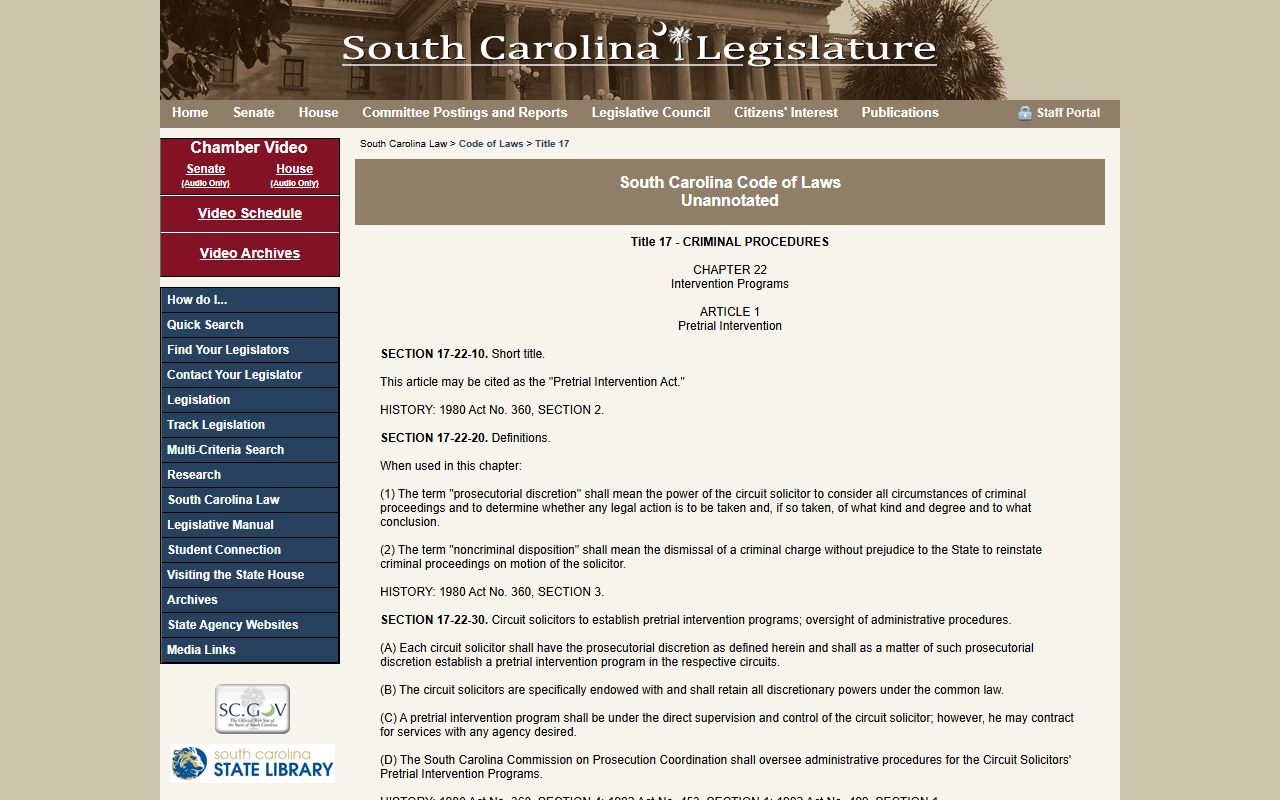
The state's diversion and expungement statutes in Title 17, Chapter 22 set eligibility, the mandatory order form, fees, and how the order clears the record across agencies. Start there to check if an arrest qualifies.
Diversion and Pretrial Intervention
Not every arrest ends in a conviction record. South Carolina runs diversion programs that can lead to a noncriminal disposition. Pretrial Intervention is the most common. A person must apply within set deadlines, pay an application and participation fee, and finish the program. Success can mean the charge is resolved without a conviction and the arrest record can be destroyed.
Other programs work the same way for qualifying charges. The Alcohol Education Program and the Traffic Education Program both offer a disposition and a possible expungement after completion. Inability to pay cannot bar a person from taking part. These programs are tied to the Solicitor and the statewide treatment-court framework.
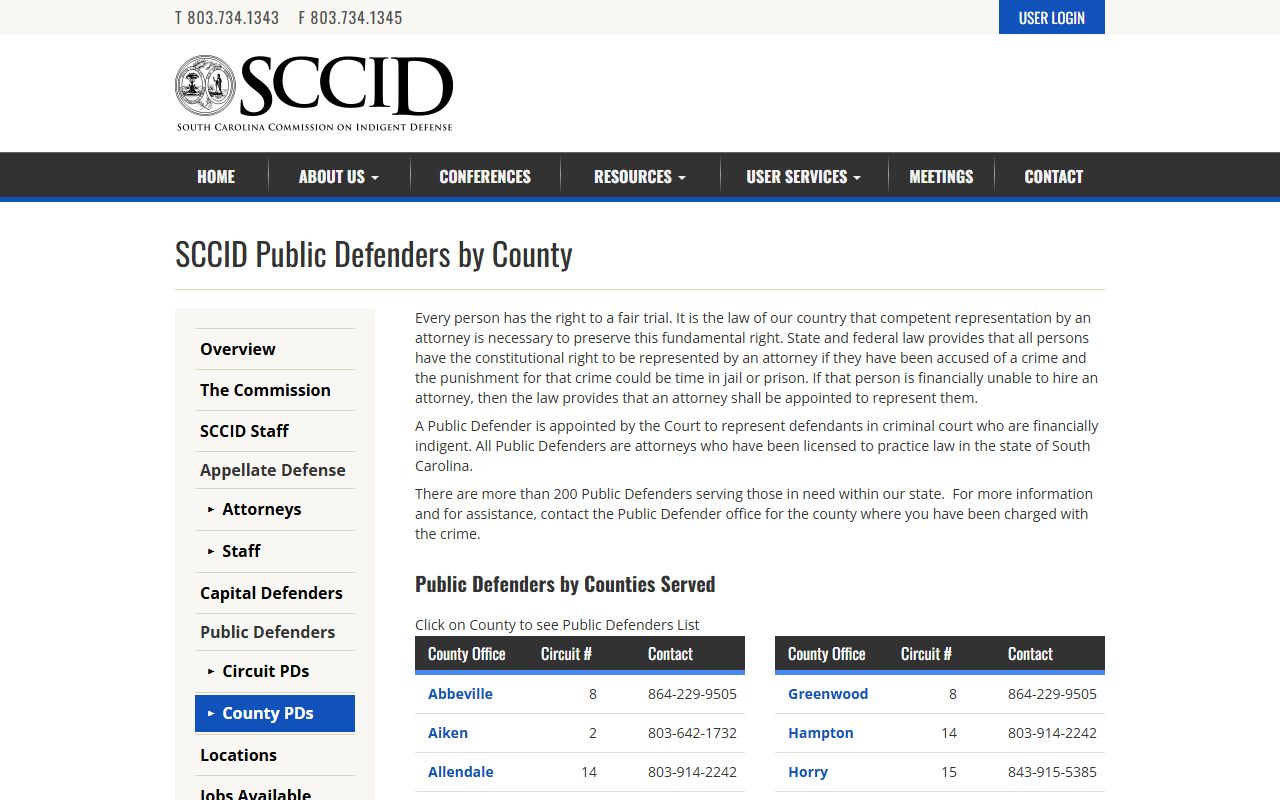
The SC Commission on Indigent Defense explains that public defenders represent indigent defendants facing possible jail time, which is the group that often pursues diversion. The Spartanburg County Public Defender handles that work locally.
DUI and DWI Arrest Records
A DUI arrest in Spartanburg County is a criminal matter. Depending on the charge level and court, it can run through Magistrate Court or General Sessions. The arrest still shows up in the Sheriff's booking data first, then in the criminal court case. A guilty result is reported to the SCDMV and can affect a driver's license.
Because a DUI touches both the criminal court and a driving record, it overlaps two systems. The criminal side is covered through arrest and court records. The driving-record side, including points and a license check, lives in the traffic court records system and the state DMV. People with a CDL or a possible license consequence should get legal advice before resolving a charge.
Warrants, Bond, and the Jail
Many arrests start with a warrant. The Sheriff's Warrant Division handles active, bench, Family Court, and General Sessions bench warrants. After an arrest on a warrant, the person is booked, and Bond Court at the Detention Center sets the conditions for release. The booking entry usually shows the bail amount.
To check for a warrant, use the Spartanburg County warrant records page, since there is no public active-warrant portal. To find someone currently in custody, use the inmate records page and the Detention Center roster. An arrest, a warrant, and a jail booking are linked, but each has its own record and its own office.
Victim Services and Notifications
Crime victims have a separate set of resources after an arrest. The Solicitor's Victim Witness Unit informs victims of their rights, attends hearings, helps with Victim Impact Statements, and assists with compensation claims for medical bills, counseling, and lost wages. The unit also acts as a liaison with agencies and includes a multilingual specialist. These services are free and confidential.
Victims can also track custody changes. The state notification system covers offenders held in county detention, state prison, and supervision. A victim can register for alerts about release, transfer, or a return to custody.
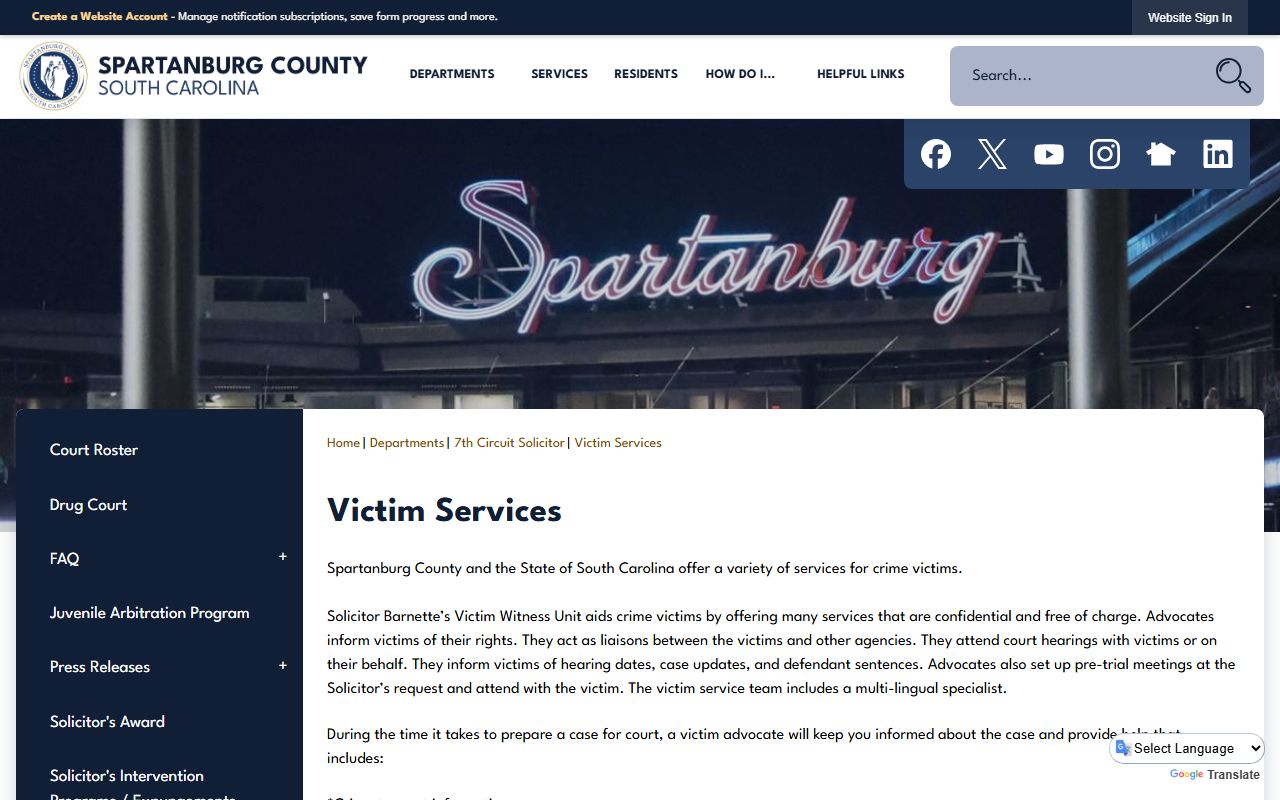
The Solicitor's Victim Services page lists the victim-witness services, the corrections notification line, and parole video-conference information. It is the official starting point for victims tied to a Spartanburg County arrest.
Juvenile Arrest Records
Juvenile records get special treatment. State law makes juvenile court and agency records confidential. Access reaches only a judge, the child's attorney, and a few authorized people, or it comes by court order. A juvenile booking is generally not posted on the public roster, and juvenile matters are handled through Family Court rather than General Sessions.
Eligible juvenile records can be expunged. The statute sets the conditions for status offenses and certain nonviolent matters. This is a narrower path than the adult process, and it is handled under the juvenile code.
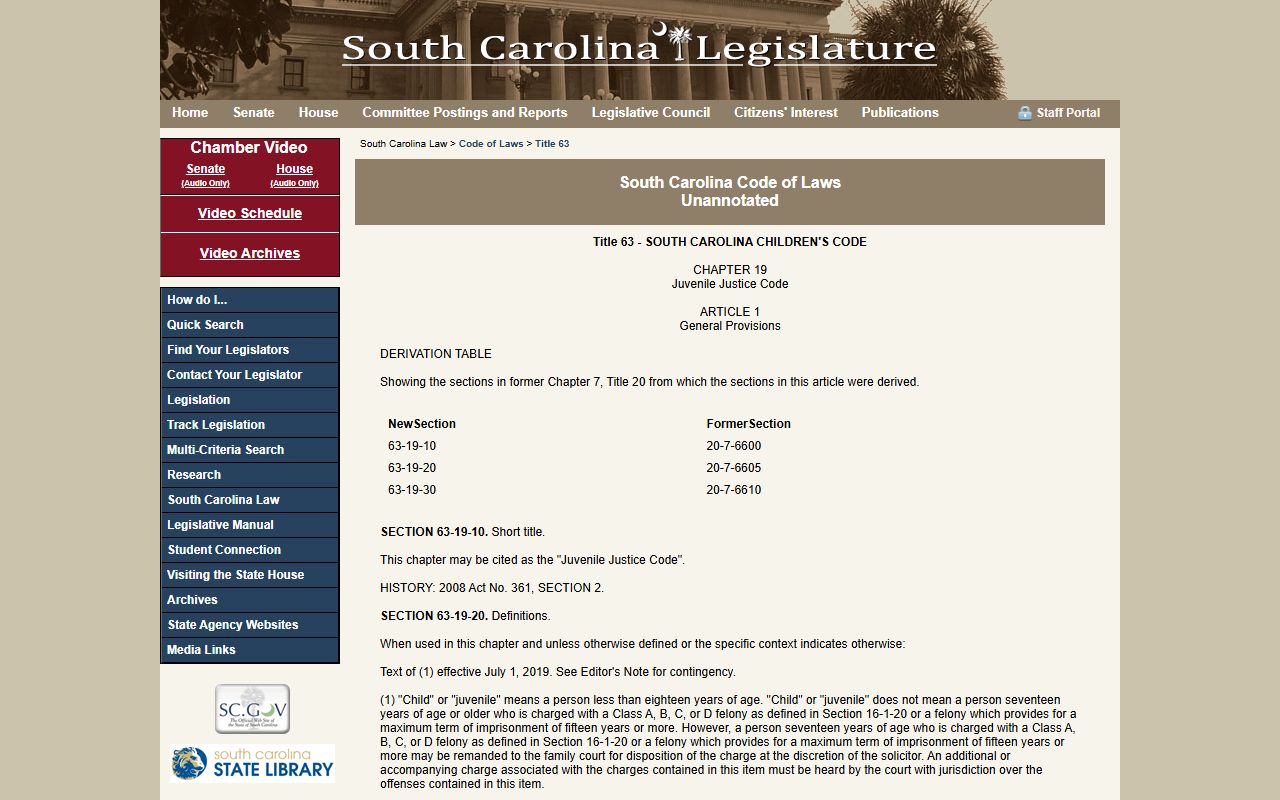
The South Carolina Juvenile Justice Code in Title 63, Chapter 19 sets the confidentiality rules and the juvenile expungement path. It is the controlling law for any juvenile arrest record in Spartanburg County.
Accuracy of Arrest Records
Booking data is a snapshot. It can change by the hour as people are booked and released. The Sheriff says the information is for public awareness and is not a criminal-history report. A charge listed at booking may be reduced, dropped, or replaced later in court. If a record looks wrong, the office that made it is the one that can fix it.
For a job, housing, or legal decision, an arrest record alone is not enough. Pull the criminal court case and read the disposition. The court records system shows how a charge actually ended.