
Where to Look Up Spartanburg County Jail Population Data
Spartanburg County does not run a single live population dashboard. The numbers come from a few official places instead. The Sheriff's Detention Services Division posts a current inmate population list and a booked-and-released list, both built for public awareness. Those lists show who is in custody now, not a tidy daily total.
For longer-term figures, the county budget and the Sheriff's annual report carry the most reliable data. The annual report covers bookings and detention activity for the year. The budget shows what the jail costs to run. Together they give a steadier read than the live roster, which only reflects the present moment.
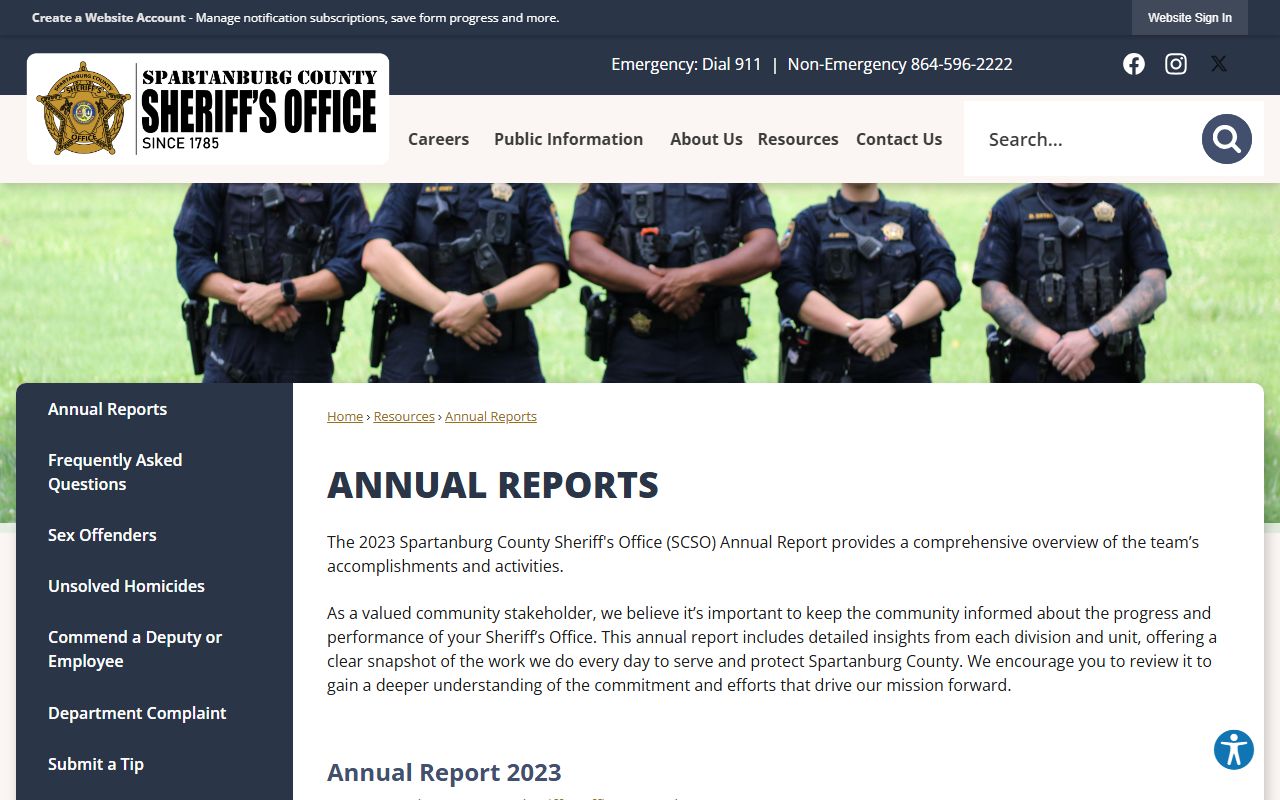
The Sheriff annual reports page hosts the yearly report, including a 2023 edition. It is the best official source for detention activity over a full year.
Spartanburg County Jail Capacity Overview
The jail is the Spartanburg County Detention Center at 950 California Avenue. Bond Court runs out of the same building, so new bookings can get a bond hearing on site. Major Chris Leso is listed for the Detention Services Division, reached at 864-596-2607.
The county does not publish a simple rated bed capacity on its current pages. That figure is not available from official sources, so this page does not estimate it. The table below shows what the official record does provide, with the source noted for each line.
| Item | Figure | Source / Confidence |
|---|---|---|
| Rated jail bed capacity | Not published | Current Sheriff and county pages do not list a capacity figure |
| Average inmate population | 805 | Older county budget PDF; county-specific but dated |
| Operating-cost concentration | 61% | FY 2026 budget note: meals, medical, and inmate costs |
| Facility | Detention Center / Bond Court | 950 California Ave, per Sheriff pages |
Note: The 805 average comes from an older budget document, so treat it as a rough historical marker rather than a current daily count.
Average Daily Population
Average daily population, or ADP, is the typical number of people held on a given day across a period. It smooths out the spikes the live roster shows. For Spartanburg County, the clearest official figure is the average inmate population of 805 cited in an older county budget. That number is county-specific, but it is dated, so it should not be read as today's count.
A current, audited ADP is not published in an accessible official table. The Sheriff's annual report is the place that data would live, but the detailed detention tables were not extracted in this pass. Anyone who needs a precise, recent ADP should request it from the Detention Services Division or pull it from the latest annual report.
ADP differs from the live roster count in a useful way. The roster shows the number in custody at one moment, which can swing with a weekend of arrests or a wave of bond hearings. ADP averages those swings over a month, a quarter, or a year. So a single roster reading can sit well above or below the true average, and ADP is the steadier figure for planning and comparison.
What the Jail Costs to Run
Cost is one of the clearest population-linked figures the county does publish. The FY 2026 budget note states that inmate meals, medical expenses, and other inmate costs make up 61% of the detention operating budget. That share tells you most of the jail's spending tracks directly with how many people it holds and how much care they need.
The full budget table was not extracted, so a total dollar figure is not given here. The 61% concentration is the county-specific data point on record. As the population rises or falls, those direct inmate costs move with it, which is why budget documents watch the count so closely.
The makeup of that 61% is worth a moment. Meals scale almost straight with the headcount, since each person must be fed every day. Medical cost is harder to predict, because one inmate with a serious condition can drive a large bill on their own. The rest covers other direct inmate needs. Together they explain why a higher population, or a sicker one, pushes the jail budget up fast.
Pretrial and Sentenced Population
County jails hold two broad groups. Pretrial detainees are held while a case is pending, often because they cannot post bond. Sentenced inmates are serving a term, usually a shorter one, since long sentences move to state prison. The split matters because pretrial numbers respond to bond decisions and case speed, not just crime rates.
A Spartanburg-specific pretrial-versus-sentenced breakdown is not published in an accessible official source. For context, Vera reports that in 2015 pretrial detainees made up 70% of the total jail population in South Carolina. That is a statewide figure, not a county count, but it shows how large the pretrial share tends to be in this state.
| Population Group | Spartanburg County | South Carolina (Vera, 2015) |
|---|---|---|
| Pretrial share | Not published locally | About 70% of the jail population |
| Sentenced share | Not published locally | The remaining minority |
Note: The 70% figure is a 2015 statewide estimate from Vera, not a current Spartanburg County number, and jail snapshots can vary by collection method.
Demographic Context for the Jail Population
A detailed local breakdown by race, sex, and age is not published in an accessible official Spartanburg County source. The Sheriff's annual report is where that data would appear, but the tables were not extracted in this pass. So the local picture stays incomplete here, and this page does not fill the gap with guesses.
State context is available. Vera's South Carolina fact sheet reports that women's jail incarceration has grown a great deal since 1980, and that Black residents are overrepresented in prison relative to their share of the state population. These are statewide patterns drawn from federal data, not Spartanburg County counts, but they frame the kinds of disparities researchers track at the county level.
National and State Context
To judge a single county's numbers, you need a yardstick. Two federal-grade sources provide it. The Bureau of Justice Statistics is the national source for jail and prison data. The Vera Institute builds on BJS data to publish rates per 100,000 residents, which lets you compare a county, a state, and the country.
Vera draws on the BJS Annual Survey of Jails, the Census of Jails, and mortality data, and it calculates rates per 100,000 residents ages 15 to 64. Vera cautions that local jail data are snapshots or estimates, and that points across years may use different collection methods. So a county-versus-state-versus-national comparison should be read as a general guide, not a precise audit.
| Level | What the Data Shows | Source |
|---|---|---|
| County | Local jail counts; full per-100,000 rate not published in a simple table | Sheriff annual report, county budget |
| State | South Carolina jail and prison patterns, pretrial share, disparities | Vera South Carolina fact sheet |
| National | Baseline jail and prison rates and trends | Bureau of Justice Statistics |
The Bureau of Justice Statistics publishes the national jail and prison reports that anchor these comparisons. It is the federal source the other tools build on.
Population Trends Over Time
A clean five-year trend for Spartanburg County is not available in an accessible official source. Year-by-year ADP, length of stay, and cost-per-inmate tables were not located on current public pages. The right move for a precise trend is to pull several years of the Sheriff's annual report or the county budget side by side.
For a broader trend view, Vera's tool tracks county jail rates across decades using federal survey data. It lets you see how a county or state has moved over time, with the snapshot caveats noted above.
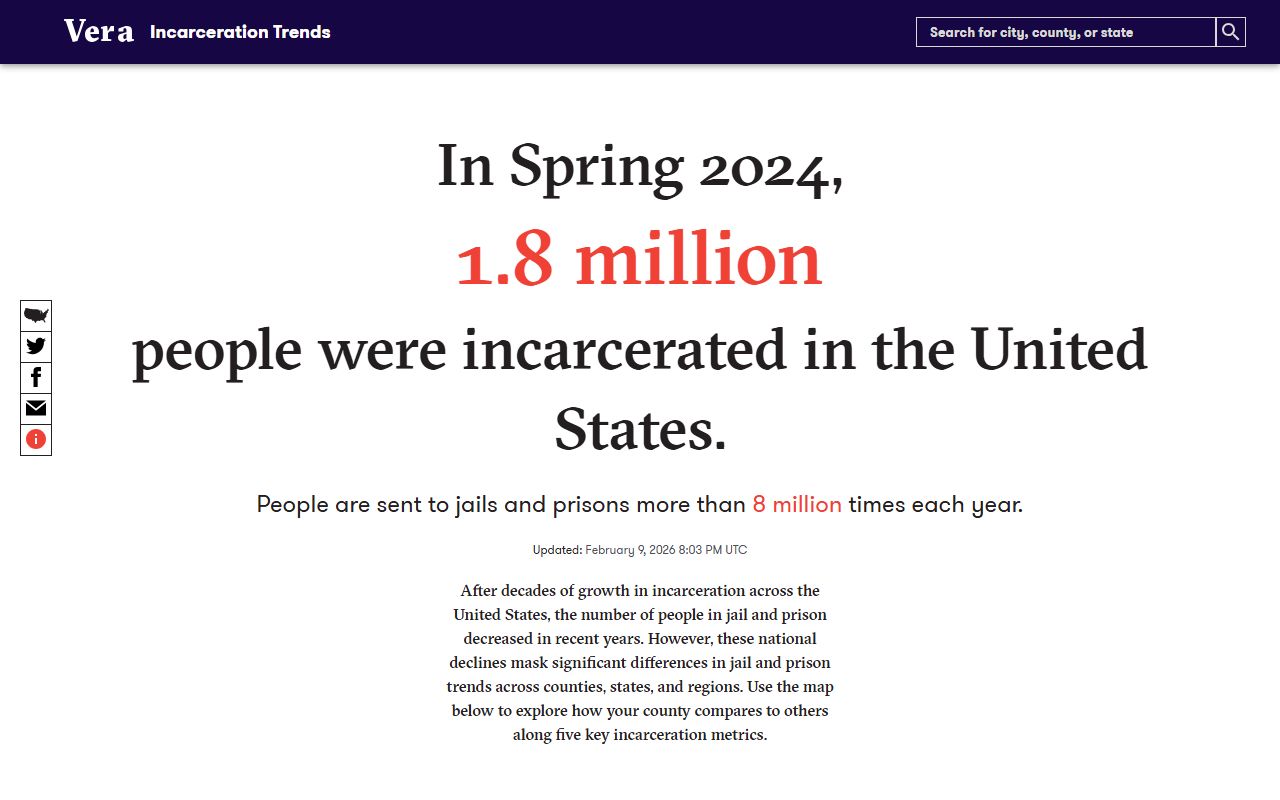
The Vera Incarceration Trends tool charts county and state jail data over time. It is the cleanest way to place a Spartanburg number in a longer trend.
Searching for Inmate Records by Name
This page covers population data, not individual lookups. To find one person in custody, with charges and bond, use the Sheriff Bookings Search on the Spartanburg County inmate records page. To track a release or set up alerts, see released inmates.
Spartanburg County Detention Services Division
The population numbers all trace back to one office. The Detention Services Division runs the Spartanburg County Detention Center at 950 California Avenue. Major Chris Leso is listed for the division, reached at 864-596-2607. Its stated mission is to protect the public by securely detaining people who are arrested and accused of offenses against county residents.
The division is also the source of the public count. Its Detention Services Division page says the inmate population and booked-and-released lists are meant to let the public identify current jail inmates, including bail amounts and booking details. The same page warns that the data may change quickly and may not always show the latest status. It is for public awareness, not proof of criminal history.
So the live roster, the bail figures, and the booking detail all flow from this division. The yearly totals come from the same office through the Sheriff's annual report. For one-person lookups instead of counts, use the Spartanburg County inmate records page.
Where the Data Comes From
Every figure on this page traces to an official source. The live counts come from the Sheriff's Detention Services lists. The average population of 805 and the 61% cost note come from county budget documents, with the 805 figure flagged as older. The yearly detention activity comes from the Sheriff's annual report.
State and national context comes from Vera and BJS. Where a local number is not published, this page says so rather than estimate it. For anything you plan to rely on, request the current figure from the Detention Services Division or the county budget office.
Mixing sources calls for a little care. A live roster count, an older budget average, and a federal survey rate measure different things over different periods, so they will not line up neatly. The cleanest read pairs a current local figure with the matching year of state or national data, and treats older numbers as history. When a comparison must hold up, cite the year and the source for each figure rather than blending them into one number.