
South Carolina Freedom of Information Act
South Carolina's public-records framework starts with the Freedom of Information Act, Title 30, Chapter 4 of the state code. The Act gives the public the right to inspect, copy, or receive an electronic copy of the records that public bodies keep, unless an exemption or another law applies. S.C. Code § 30-4-10 names the Act, and § 30-4-15 declares that public business should be done openly so citizens can learn about official conduct with minimum cost or delay.
The Act reaches county offices. S.C. Code § 30-4-20 defines a public body broadly to include counties, boards, and quasi-governmental bodies. That definition pulls Spartanburg County offices within FOIA, except where court rules or specific statutes govern instead. S.C. Code § 30-4-30 sets the right of access and the fee limits, and § 30-4-50 lists categories that are specifically public, including certain incident reports and booking information.
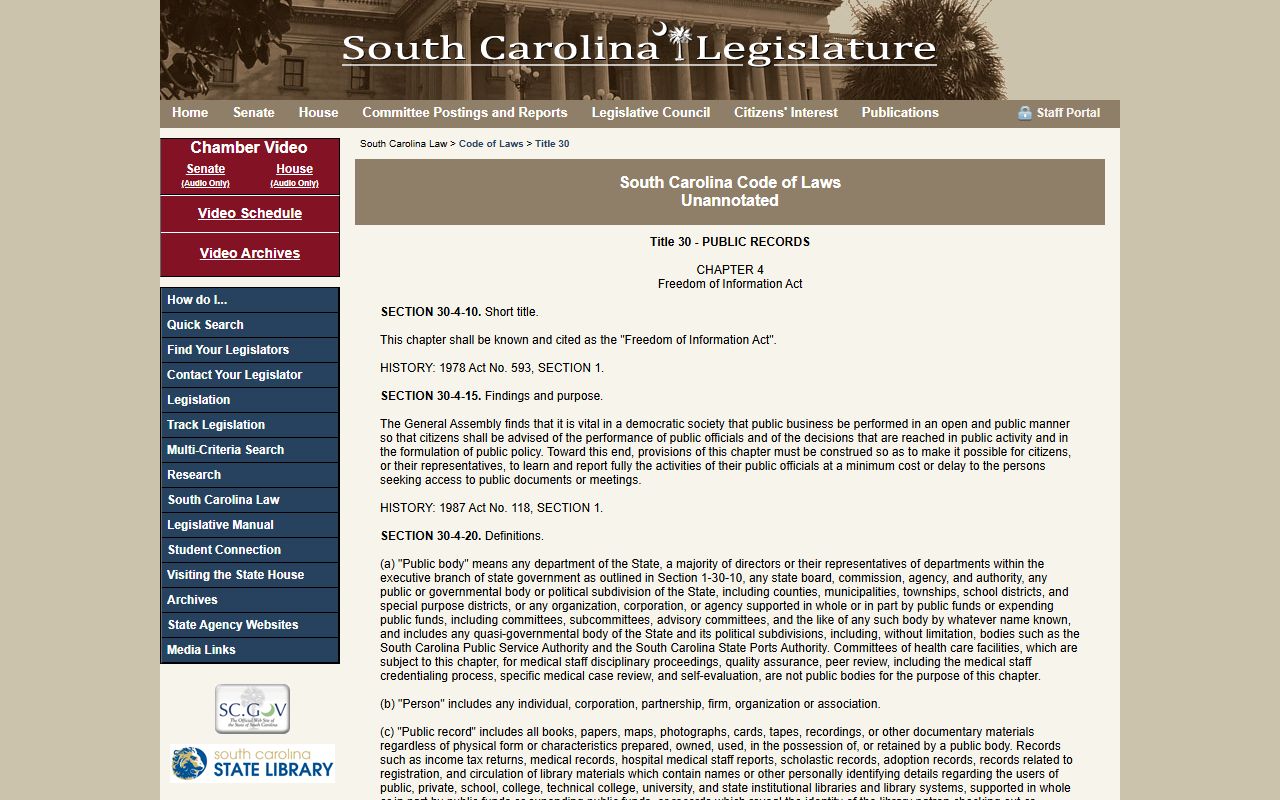
The full text of the South Carolina FOIA sets out the right of access, the exemptions, and the enforcement path for Spartanburg County public records.
What the County Clerk and Other Offices Keep
Different offices hold different Spartanburg County public records. The Clerk of Court keeps Circuit and Family Court case files. The Register of Deeds is a separate office that records land documents. Probate Court keeps wills, estates, and marriage licenses. The Sheriff holds booking and incident records. Knowing the right office saves time, because a request sent to the wrong place gets bounced.
Here are the main types and where they live.
- Court case files - civil, criminal, and family records held by the Clerk of Court.
- Land and property documents - deeds and mortgages recorded by the Register of Deeds.
- Marriage and estate records - licenses and probate files held by Probate Court.
- Jail and incident records - booking data and reports held by the Sheriff's Office.
- County administrative records - budgets, contracts, and forms held by county departments.
Land records sit with the Register of Deeds, not the Clerk. That office cannot perform title searches, and debt collection and foreclosures are filed in the Clerk of Court office instead. For estates and marriage files, see Spartanburg County probate records.
How to File a Public Records Request in Spartanburg County
Most requests can be made in writing, by mail, by email, or through a county web form. A FOIA request does not need a special format, but a clear description helps the office find what you want. The county runs a Form Center with categories for Clerk of Court, FOIA, the Public Defender, and other departments. Address the request to the office that actually holds the record.
- Identify the office that keeps the record you want, such as the Clerk, Register of Deeds, Probate, or the Sheriff.
- Describe the records clearly, with names, dates, or case numbers when you have them.
- Submit the request by mail, email, or the county Form Center.
- Wait for the response within the statutory timeline.
- Pay any reasonable fees, then receive the records or an explanation of any denial.
The county Form Center lists a FOIA category and lets you search web forms by department for Spartanburg County public records.
Public Records Request Form Fields
A good request gives the office enough to act on without guessing. You always need your name and contact details and a clear description of the records. A date range and a format preference are optional but speed things up. The table lists the common fields on a public records request.
| Field | Required | Notes |
|---|---|---|
| Requester Name | Yes | So the office can reply and send the records |
| Contact Information | Yes | Mailing address, email, or phone for the response |
| Description of Records | Yes | Names, case numbers, or document types you want |
| Date Range | No | Narrows the search and can lower the fee |
| Format Preference | No | Paper copies, electronic copies, or inspection |
If the record is a court file, you may not need a FOIA request at all, since much of it is on the Spartanburg Public Index. The court records page covers that online search.
Public Records Fees in Spartanburg County
FOIA fees must stay reasonable. S.C. Code § 30-4-30 says a public body may charge for search, retrieval, redaction, and copies, but the fees cannot exceed the actual cost. Records should be furnished at the lowest possible cost. A fee waiver or reduction is allowed when the release serves the public interest. Some records carry a set statutory fee instead, like a certified marriage copy.
| Item | Amount |
|---|---|
| FOIA search, retrieval, and copy charges | Reasonable, not over actual cost |
| Certified copy of marriage license (Probate) | $5.00 per copy |
| Public interest fee waiver or reduction | Allowed when release serves the public |
| Other clerk copy and search fees | Not posted online; call the office |
Probate marriage copies are paid by certified check or money order for mail requests. The Clerk of Court does not post a full copy-fee schedule, so call before a visit.
Records That Are Exempt
Not every record is open. S.C. Code § 30-4-40 protects several categories, including law-enforcement investigatory material when release would harm a case, personal privacy, attorney-client and work-product material, trade secrets, and certain security information. Other statutes close whole record types regardless of FOIA.
Juvenile records are confidential under S.C. Code § 63-19-2010. Mental-health commitment records are confidential under S.C. Code § 44-22-100. Expunged criminal records are destroyed or held only as the expungement statutes in Title 17, Chapter 22 allow. Adoption and sealed court records also stay closed. Personal identifiers like Social Security and bank account numbers are redacted from public filings.
Note: An exemption usually lets an office withhold a record, but it does not always require withholding, so an office may still release some material.
Records That Are Specifically Public
FOIA does more than list exemptions. It also names records that the public can see. S.C. Code § 30-4-50 sets out categories that are specifically public, subject to limits. These include certain law-enforcement incident reports and jail-booking information. That is the legal hook behind the Sheriff's public booking data and the basic facts of an arrest.
Court access has more than one source, too. FOIA is the start, but court records also turn on court rules, common-law openness, and the Judicial Branch's public-index policy. The Public Index is a free public service, yet sealed, confidential, and non-public events are kept off it. So the booking facts the Sheriff posts and the case detail on the index both rest on rules that say court and law-enforcement information is presumptively open unless a statute or order closes it.
Booking data is public for awareness, but it is not a criminal-history report, and it can lag the latest status. For the jail side of these public records, see the Spartanburg County inmate records page. For arrest detail, see arrest records.
Federal Records and Free Court Data
Some records sit outside the county and the state entirely. Federal cases tied to Spartanburg County run through the U.S. District Court for the District of South Carolina and are searched on PACER, the paid federal access system. Federal bankruptcy is its own court. A free option, CourtListener, hosts many federal dockets and documents that users have contributed.
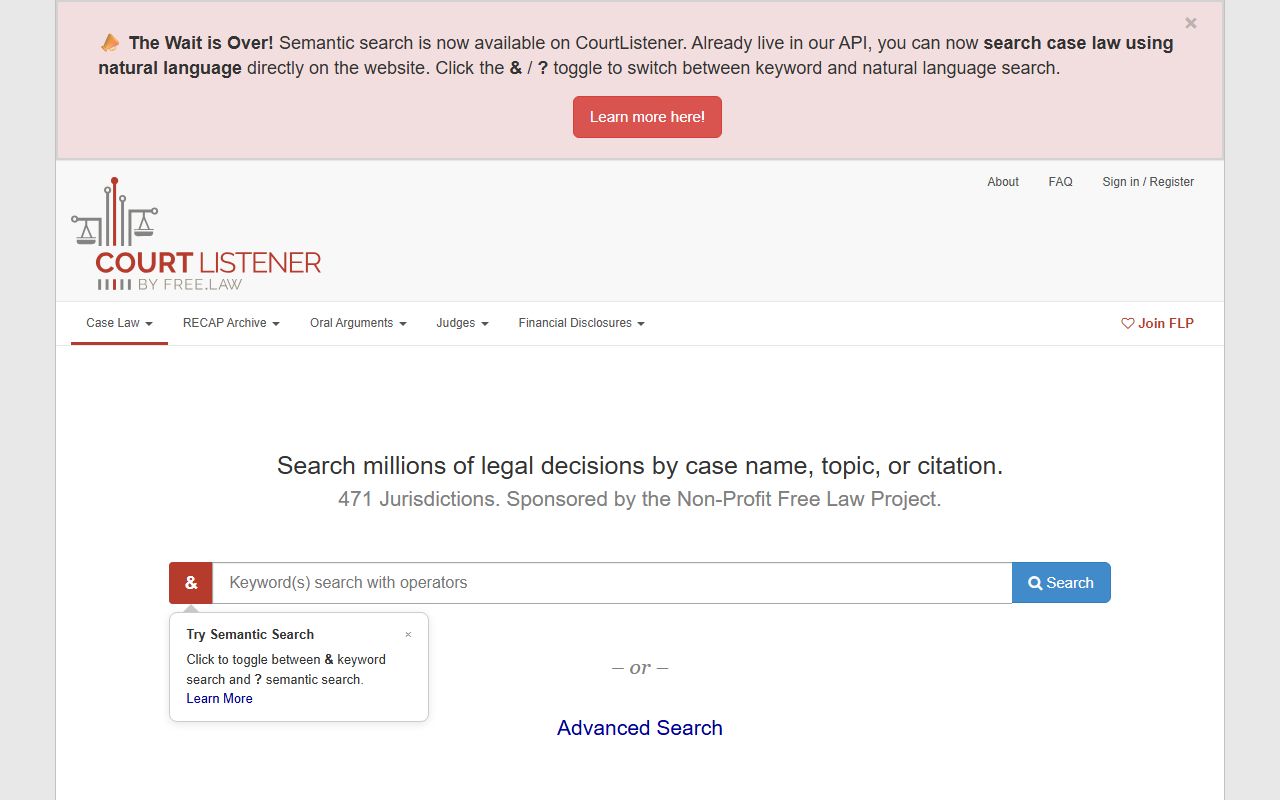
CourtListener offers free access to federal opinions and dockets, a useful complement to paid PACER searches for Spartanburg County public records at the federal level.
Federal bankruptcy filings for residents and businesses go through a separate court. Chapter 7, 11, and 13 cases each follow their own process.
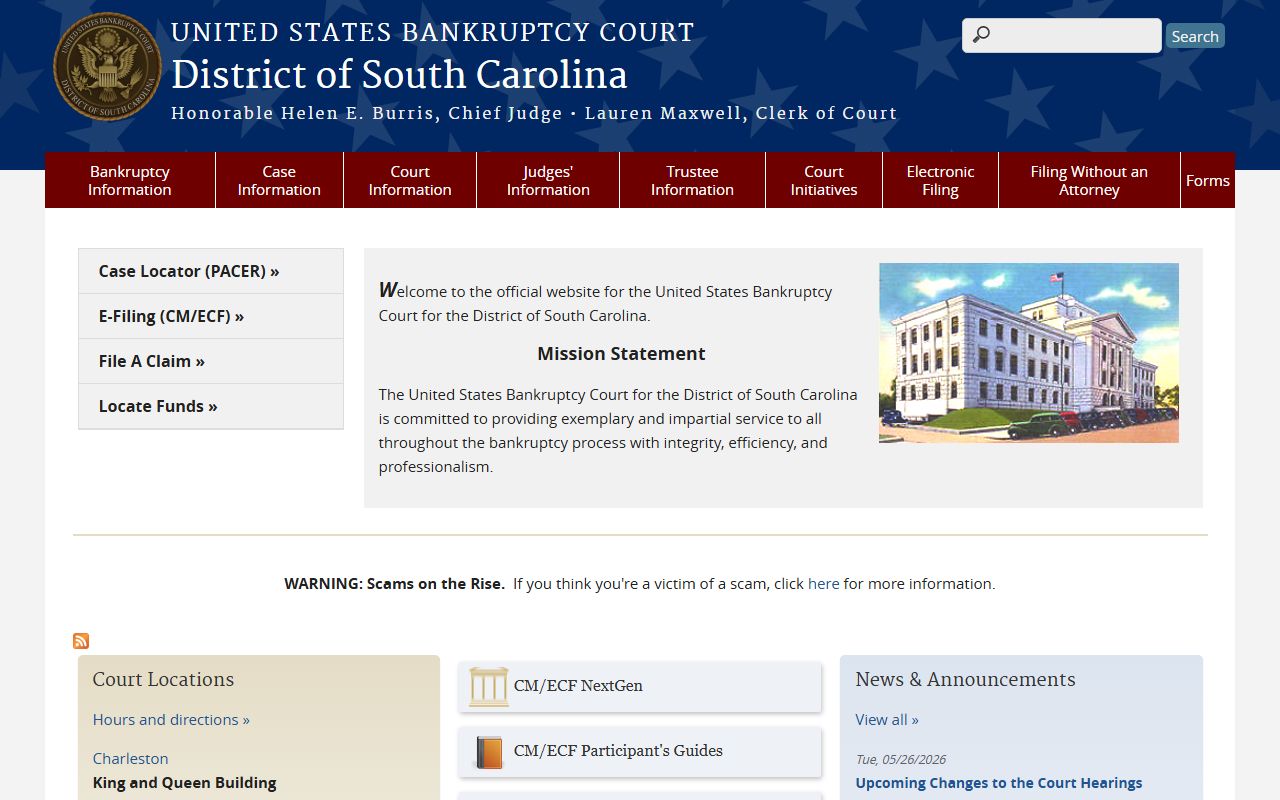
The U.S. Bankruptcy Court for South Carolina handles bankruptcy filings for the district that includes Spartanburg County.
Federal appeals from South Carolina move to the regional circuit court, headquartered in Richmond, Virginia.
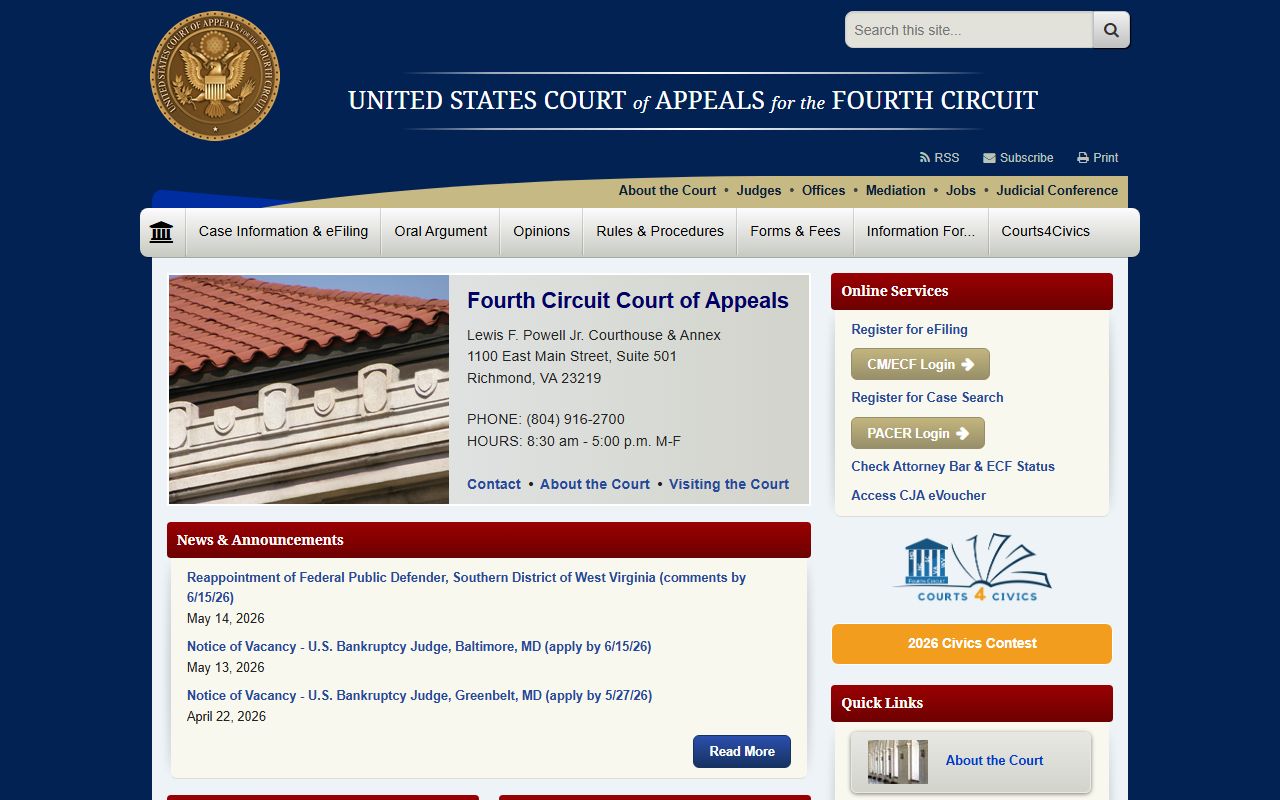
The Fourth Circuit Court of Appeals hears federal appeals from South Carolina, including matters that begin in the district court near Spartanburg County.
If Your Request Is Denied
FOIA in South Carolina has a court-based enforcement path. S.C. Code § 30-4-100 lets a citizen apply to the Circuit Court for declaratory or injunctive relief when a public body wrongly withholds a record. The action must be filed within the statutory time limit. The Attorney General publishes FOIA guidance and opinions but does not act as a universal appeals officer.
Before filing suit, it often helps to ask the office to explain the denial in writing and to cite the exemption. Many disputes are about scope or fees, not flat refusals, and a narrower request can clear the block. South Carolina Legal Services may help income-eligible residents with civil legal questions tied to records access.
South Carolina Legal Services lists a Spartanburg office and offers income-based civil legal help, including matters that touch public records access.